
The Best Foods For Weight Loss: A Comprehensive Guide to Nutrient-Dense Eating
Understanding the Science Behind the Best Foods For Weight Loss
When we speak of the best foods for weight loss, we’re referring to items that create a caloric deficit whilst simultaneously providing satiety, essential nutrients, and metabolic support. The fundamental principle of weight loss remains straightforward: consume fewer calories than your body expends. However, the quality of those calories profoundly influences your ability to sustain this deficit without experiencing overwhelming hunger or nutritional deficiencies.
The concept of energy density proves crucial here. Foods with low energy density contain relatively few calories per gram, typically because they’re rich in water and fibre. This allows you to consume larger portions, physically filling your stomach, without exceeding your caloric allowance. Conversely, energy-dense foods pack substantial calories into small volumes, making portion control considerably more challenging.
Additionally, the thermic effect of food (TEF) plays a notable role. Protein possesses the highest TEF, requiring your body to expend approximately 20-30% of the protein’s caloric value simply to digest and process it. Carbohydrates follow at 5-10%, whilst fats require only 0-3%. This metabolic reality explains why protein-rich foods consistently feature among the best foods for weight loss.
Satiety—the feeling of fullness that persists after eating—represents another critical factor. Foods that delay gastric emptying, stabilise blood sugar levels, and trigger satiety hormones help reduce overall caloric intake naturally, without requiring conscious willpower at every meal.
High-Protein Powerhouses: Essential Best Foods For Weight Loss
Lean protein sources deserve their prominent position in any discussion of the best foods for weight loss. Chicken breast, turkey, white fish, and lean cuts of red meat provide substantial protein with minimal fat content. A 100g portion of skinless chicken breast delivers approximately 31g of protein for merely 165 calories, making it exceptionally efficient for weight loss purposes.
Eggs merit particular attention as one of the most complete protein sources available. Research published in the National Library of Medicine demonstrates that individuals who consume eggs for breakfast experience greater satiety and reduced caloric intake throughout the day compared to those eating bagel-based breakfasts with matching caloric content. The protein in eggs also helps preserve lean muscle mass during weight loss, which is vital for maintaining metabolic rate.
Greek yoghurt stands out amongst dairy options, containing roughly twice the protein of regular yoghurt whilst offering beneficial probiotics that may support gut health and metabolic function. Opt for plain, unsweetened varieties to avoid added sugars that could undermine your weight loss efforts.
Fish and seafood deserve special mention, particularly fatty varieties like salmon, mackerel, and sardines. Despite containing more calories than white fish, their omega-3 fatty acid content may enhance insulin sensitivity and reduce inflammation, potentially supporting more effective fat metabolism. Moreover, the protein content in fish triggers significant satiety, with studies suggesting fish protein may be more satiating than equivalent amounts of beef or chicken.
Fibre-Rich Vegetables: The Foundation of Best Foods For Weight Loss
Non-starchy vegetables form the cornerstone of any effective weight loss eating plan. Leafy greens such as spinach, kale, rocket, and Swiss chard offer exceptional value, providing voluminous portions with minimal caloric impact. A generous bowl of spinach contains approximately 7 calories whilst delivering iron, magnesium, vitamin K, and various antioxidants.
Cruciferous vegetables—including broccoli, cauliflower, cabbage, and Brussels sprouts—offer additional benefits beyond their low caloric content. These vegetables contain compounds called glucosinolates, which some research suggests may support metabolic health. Their high fibre content slows digestion, promoting extended satiety and more stable blood sugar levels.
Courgettes, aubergines, peppers, and tomatoes provide excellent options for adding volume to meals without significantly increasing caloric content. Courgetti (spiralised courgette) serves as an outstanding alternative to traditional pasta, reducing a meal’s caloric density whilst increasing vegetable intake.
The concept of ‘volume eating’ centres around these very foods. By filling half your plate with non-starchy vegetables at each meal, you naturally reduce the space available for more caloric items whilst maintaining satisfying portion sizes. This approach proves psychologically sustainable because you’re eating visually substantial meals rather than feeling deprived through restrictive portioning.
Whole Grains and Complex Carbohydrates Amongst Best Foods For Weight Loss
Contrary to popular misconception, carbohydrates needn’t be eliminated for successful weight loss. The distinction lies in choosing complex, whole grain sources over refined alternatives. Oats represent perhaps the quintessential weight loss grain, with their beta-glucan fibre content demonstrating particular effectiveness at promoting satiety. A bowl of porridge made with rolled oats provides sustained energy release, helping prevent mid-morning snacking that often derails caloric deficits.
Quinoa, technically a seed rather than a grain, offers complete protein alongside complex carbohydrates and fibre. Its relatively low glycaemic index means it causes gradual blood sugar rises rather than the spikes and subsequent crashes associated with refined carbohydrates. These blood sugar fluctuations often trigger cravings and overeating, making glycaemic control essential for sustainable weight loss.
Brown rice, wholewheat pasta, barley, and bulgur wheat all provide superior alternatives to their refined counterparts. The additional fibre and nutrients in whole grains contribute to greater satiety, with research indicating that whole grain consumers tend to maintain healthier body weights over time. Portion control remains important, however, as even nutritious whole grains are relatively caloric compared to vegetables.
Legumes and pulses—beans, lentils, chickpeas, and peas—deserve special recognition as perhaps the most underrated weight loss foods. Their unique combination of protein and fibre creates exceptional satiety, whilst their resistant starch content feeds beneficial gut bacteria that may influence metabolic health. Studies consistently link regular legume consumption with lower body weights and improved metabolic markers.
Fruits That Support Weight Loss Goals
Whilst fruits contain natural sugars, their fibre content, water content, and nutrient density make them valuable components of a weight loss eating plan. Berries deserve particular emphasis, offering exceptional nutritional value with minimal caloric impact. A cup of strawberries provides approximately 50 calories alongside vitamin C, manganese, and powerful antioxidants called anthocyanins.
Apples and pears, with their high pectin fibre content, demonstrate notable satiety-promoting effects. Research suggests consuming whole fruit before meals can reduce overall caloric intake at that meal. The act of chewing whole fruit also contributes to satiety signals, something lost when fruits are juiced or puréed.
Grapefruit has garnered attention in weight loss circles, with some studies suggesting it may improve insulin sensitivity and support modest weight loss when consumed regularly. The mechanisms aren’t fully understood, but the fruit’s low caloric density and high water content certainly contribute to its weight loss-friendly profile.
Stone fruits like peaches, nectarines, and plums offer sweet satisfaction with relatively few calories, making them excellent alternatives to energy-dense desserts. Their seasonal availability encourages variety in fruit consumption, which supports diverse nutrient intake. However, portion awareness remains prudent with higher-sugar fruits like bananas, grapes, and mangoes—whilst nutritious, their caloric density is notably higher than berries or citrus fruits.
Healthy Fats: Surprising Additions to Best Foods For Weight Loss
The inclusion of fats in a weight loss context often confuses people, given fat’s high caloric density at 9 calories per gram. However, moderate amounts of healthy fats significantly enhance satiety and nutrient absorption, potentially supporting more sustainable weight loss. The key lies in appropriate portioning and selecting sources that offer additional nutritional benefits.
Avocados provide monounsaturated fats alongside fibre, potassium, and various vitamins. Research indicates that avocado consumers tend to have lower body weights and smaller waist circumferences, possibly because the fruit’s fat and fibre content promotes satiety. Half an avocado contains approximately 120 calories—manageable within a weight loss plan whilst providing substantial nutritional value.
Nuts, particularly almonds, walnuts, and pistachios, offer protein, fibre, and healthy fats in a convenient package. Despite their caloric density, studies consistently show that regular nut consumers don’t typically gain excess weight, possibly because nuts’ satiety effects reduce overall food intake, and some calories remain undigested. A small handful (approximately 30g) makes a satisfying snack that curbs hunger between meals.
Extra virgin olive oil, whilst caloric, provides monounsaturated fats and polyphenols that may support metabolic health. Using modest amounts for cooking or dressings enhances vegetable consumption by making salads and roasted vegetables more palatable, indirectly supporting weight loss through increased vegetable intake.
Chia seeds and flaxseeds deserve mention for their exceptional fibre content, particularly soluble fibre that forms a gel-like substance in the digestive tract, promoting extended satiety. A tablespoon of chia seeds provides approximately 5g of fibre for just 60 calories, making them an efficient addition to smoothies, yoghurt, or porridge.
Beverages and Metabolism-Supporting Best Foods For Weight Loss
What we drink significantly impacts weight loss efforts, sometimes more than people realise. Plain water remains the optimal beverage choice, with research demonstrating that consuming water before meals can reduce caloric intake. Even mild dehydration can masquerade as hunger, leading to unnecessary snacking when the body actually requires fluids.
Green tea contains catechins, particularly EGCG (epigallocatechin gallate), which some studies suggest may modestly increase fat oxidation and metabolic rate. The effects appear small but potentially meaningful when combined with other weight loss strategies. Black coffee similarly offers metabolism-supporting caffeine, with the added benefit of essentially zero calories when consumed black.
Apple cider vinegar has gained popularity in weight loss circles, with some evidence suggesting it may improve insulin sensitivity and promote modest weight loss when consumed before meals. However, it should be diluted in water to protect tooth enamel, and expectations should remain realistic—vinegar isn’t a magic solution but may complement other dietary strategies.
Bone broth provides a low-calorie, satiating beverage option that offers protein and minerals. A cup of quality bone broth contains roughly 40-50 calories whilst providing warmth and satisfaction that can help bridge gaps between meals. Similarly, herbal teas offer flavour without calories, providing alternatives to higher-calorie beverages that might otherwise contribute to weight gain.
Practical Implementation: Creating Meals With the Best Foods For Weight Loss
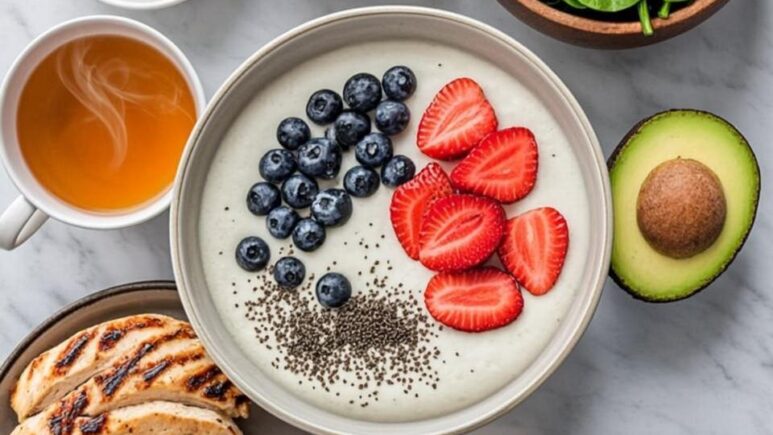
Understanding which foods support weight loss proves insufficient without practical application. The most effective approach involves combining protein, fibre, and healthy fats at each meal to maximise satiety whilst maintaining caloric control. A breakfast of Greek yoghurt topped with berries and a sprinkle of chia seeds exemplifies this principle, providing protein, fibre, and healthy fats in a satisfying combination.
Lunch might feature a large salad base of mixed greens and non-starchy vegetables, topped with grilled chicken or chickpeas for protein, a quarter of an avocado for healthy fats, and a modest portion of quinoa for complex carbohydrates. This combination provides volume, nutrients, and sustained energy without excessive calories.
Dinners can follow a similar template: half the plate filled with non-starchy vegetables, a quarter with lean protein, and a quarter with complex carbohydrates. Baked salmon with roasted vegetables and a small portion of sweet potato illustrates this approach beautifully, offering omega-3 fats, fibre, and protein in a balanced meal.
Snacks, whilst optional, can help manage hunger between meals. Apple slices with a small portion of almonds, vegetable sticks with hummus, or a hard-boiled egg with cherry tomatoes all provide satisfying combinations of nutrients that support weight loss goals. The key lies in pre-planning snacks to avoid impulsive choices that might not align with your objectives.
Sustainability remains paramount. The best foods for weight loss are ultimately those you enjoy and can incorporate into your lifestyle long-term. Experimenting with herbs, spices, and cooking methods helps prevent palate fatigue and ensures your weight loss journey remains enjoyable rather than restrictive.
Visitor comments ( 0 )