
Healthy High-Protein Snacks For Busy Days: Your Complete Guide to Sustained Energy
Why Protein Matters on Hectic Days
When your schedule is packed with meetings, errands, and family commitments, maintaining steady energy levels becomes paramount. Protein plays a crucial role in stabilising blood sugar, preventing the dreaded mid-afternoon energy crash, and keeping you feeling satisfied between meals. Unlike simple carbohydrates that provide a quick spike followed by a rapid decline, protein offers sustained energy release that helps you power through demanding days.
Additionally, protein supports muscle maintenance and repair, which is particularly important if you’re someone who squeezes in early morning workouts before rushing to the office. For busy professionals, parents, and students alike, adequate protein intake can mean the difference between mental clarity and brain fog. Research suggests that consuming 20-30 grams of protein per snack can significantly improve satiety and cognitive performance throughout demanding schedules.
The challenge, of course, is finding protein-rich options that don’t require extensive preparation or refrigeration. This is where strategic snacking becomes essential for maintaining both nutrition and convenience during chaotic days.
Essential Criteria for Busy-Day Protein Snacks
Not all protein snacks are created equal when it comes to portability and practicality. The ideal high-protein snack for busy days should meet several key criteria. Firstly, it must be portable and pack easily into a handbag, briefcase, or rucksack without creating mess or requiring special containers. Secondly, it should be shelf-stable for at least several hours, if not entirely, to eliminate the need for refrigeration.
Another important consideration is the protein-to-calorie ratio. Look for snacks that provide at least 10 grams of protein per 200 calories to ensure you’re getting meaningful nutritional value without excessive caloric intake. The snack should also be relatively low in added sugars, as these can counteract the blood sugar-stabilising benefits of protein.
Finally, consider the eating experience. Can you consume the snack quickly between meetings? Does it require utensils? Will it leave your hands sticky or smelly? The best busy-day protein snacks are those you can eat neatly with one hand whilst checking emails or driving (though we don’t recommend the latter). For more guidance on protein requirements, the NHS provides detailed information on incorporating protein into your daily diet.
Quick No-Prep High-Protein Snacks
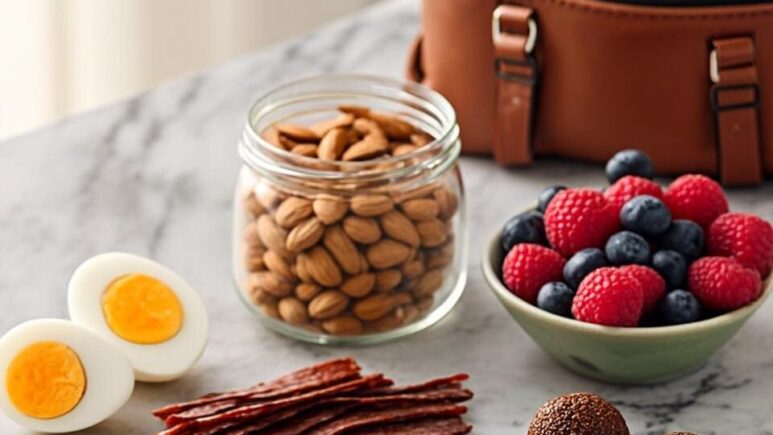
For those days when even five minutes of preparation is too much, having a repertoire of no-prep protein snacks is invaluable. Beef or turkey jerky remains a champion in this category, offering approximately 10-15 grams of protein per 30-gram serving whilst being entirely shelf-stable and lightweight. Look for brands with minimal added sugars and preservatives for the healthiest option.
Nuts and seeds are another excellent choice, with almonds providing around 6 grams of protein per handful (28 grams), whilst pumpkin seeds pack an impressive 8 grams per serving. Pre-portioned nut butter packets are also brilliant for on-the-go consumption and can be squeezed directly onto fruit or wholegrain crackers.
Hard-boiled eggs, whilst requiring some advance preparation, can be purchased pre-cooked from most supermarkets and provide 6 grams of protein each. They’ll safely remain at room temperature for several hours, making them perfect for busy mornings. Cheese sticks or individual portions of mature cheddar offer 6-8 grams of protein and are generally fine without refrigeration for half a day.
For those who prefer plant-based options, roasted chickpeas deliver both protein and fibre, with approximately 6 grams of protein per quarter-cup serving. They’re easily made at home in batches or purchased ready-made from health food shops.
Simple Homemade Protein Snacks to Prep Ahead
Dedicating an hour on Sunday to prepare protein snacks for the week can transform your weekday nutrition. Protein energy balls are a popular choice, made by blending dates, nuts, protein powder, and nut butter, then rolling into bite-sized portions. These provide a concentrated source of protein and can be customised with various flavours such as cocoa, coconut, or vanilla.
Homemade protein muffins using Greek yoghurt, eggs, and a quality protein powder can yield 8-10 grams of protein per muffin. These freeze beautifully and can be defrosted overnight in the refrigerator or microwaved for 30 seconds in the morning. Savoury options include mini frittatas baked in muffin tins, which can incorporate vegetables and cheese for added nutrients.
Overnight oats prepared with protein powder and Greek yoghurt offer a substantial protein boost of 15-20 grams per serving. Prepare them in portable jars on Sunday evening, and they’ll be ready to grab each morning. For something more substantial, consider making a batch of chicken or turkey meatballs that can be eaten cold with a small container of dipping sauce.
The key to successful prep is creating variety. Prepare two or three different options each week to prevent snack fatigue and ensure you always have something appealing to reach for when hunger strikes.
Smart Store-Bought Options Worth Your Money
Whilst homemade snacks are ideal, the reality of busy days sometimes means relying on shop-bought alternatives. The market for protein snacks has exploded in recent years, but not all products deliver on their promises. Protein bars are perhaps the most ubiquitous option, with brands like Grenade and Quest offering 20+ grams of protein per bar. However, always check the sugar content, as some bars contain as much sugar as a conventional chocolate bar.
Protein yoghurts have improved dramatically in recent years. Brands such as Fage and Arla offer options with 15-20 grams of protein per pot, often with no added sugar. These are widely available and require no preparation, though they do need refrigeration.
For savoury cravings, look for protein crisps made from lentils or peas, which typically provide 8-10 grams of protein per bag. Roasted edamame is another excellent shelf-stable option, offering 14 grams of protein per 30-gram serving. Many supermarkets now stock single-serve portions of hummus with pretzels or vegetable sticks, providing a reasonable 5-7 grams of protein.
When evaluating packaged protein snacks, read labels carefully. Look for products with recognisable ingredients, minimal added sugars (less than 8 grams per serving), and a protein content that justifies the calorie count. Remember that whole food sources of protein will always be nutritionally superior to highly processed alternatives.
Protein Snacks for Different Dietary Needs
Dietary restrictions needn’t preclude you from enjoying high-protein snacks on busy days. For vegetarians, dairy products offer excellent protein density, with cottage cheese providing 11 grams per half-cup and Greek yoghurt delivering 15-20 grams per serving. Plant-based protein powders can be mixed with water or plant milk in a shaker bottle for a quick 20-gram protein boost.
Vegans have increasingly numerous options, including seasoned tofu strips that can be eaten cold (8 grams of protein per 100 grams), roasted chickpeas, and commercial vegan protein bars. Nut butter packets paired with wholegrain crackers or fruit offer 7-8 grams of protein. Many companies now produce plant-based jerky alternatives made from soy, seitan, or mushrooms that provide 10-15 grams of protein per serving.
For those with dairy intolerances, lactose-free protein options abound. Hard cheeses like mature cheddar and Parmesan are naturally very low in lactose and provide 7-10 grams of protein per 30-gram portion. Lactose-free protein shakes and yoghurts are now widely available in most UK supermarkets.
If you’re managing gluten sensitivity or coeliac disease, focus on naturally gluten-free protein sources such as nuts, seeds, eggs, and fresh meat. Many protein bars now carry gluten-free certification, but always verify the label. Rice-based protein powders offer a safe alternative to whey or barley-based products.
Timing Your Protein Snacks for Maximum Benefit
Strategic timing of protein snacks can significantly enhance their effectiveness in supporting your busy lifestyle. The mid-morning period, approximately 2-3 hours after breakfast, is an ideal time for a protein snack if you had an early start. This helps maintain steady blood sugar levels and prevents the energy dip that often occurs around 11 am.
The post-lunch afternoon slump, typically between 2 and 4 pm, is another critical window for protein consumption. A protein-rich snack during this period can improve focus and productivity for the remainder of the working day. Research indicates that protein consumption during this window may also reduce evening cravings and support better dietary choices at dinner.
For those who exercise during lunch breaks or immediately after work, consuming 15-20 grams of protein within 30 minutes of exercise supports muscle recovery and can be particularly beneficial. Pre-workout protein, consumed 60-90 minutes before exercise, may also enhance performance and reduce muscle breakdown.
If your busy days extend into the evening, a final protein snack around 8 pm can prevent late-night hunger and support overnight muscle repair. Opt for slower-digesting proteins like casein, found in cottage cheese and Greek yoghurt, which provide a steady release of amino acids throughout the night.
Practical Tips for Never Being Caught Without Protein
The key to consistent healthy snacking is creating systems that make the right choice the easy choice. Start by designating a specific compartment in your work bag or handbag for non-perishable protein snacks. Keep it stocked with items like jerky, nuts, or protein bars so you’re never caught without options.
Create a ‘snack station’ in your pantry and refrigerator at home, with pre-portioned protein snacks visible and accessible. When you’re rushing out the door, you can simply grab what you need without thinking. Consider keeping a small cooler bag in your car or office with an ice pack for items that require temperature control.
Technology can also support your snacking habits. Set phone reminders for snack times, or use a meal planning app to track your protein intake throughout the day. Many apps can even suggest protein-rich snacks based on your remaining daily protein targets.
Finally, develop the habit of always carrying a refillable water bottle. Protein metabolism requires adequate hydration, and thirst is often mistaken for hunger. By staying hydrated, you’ll optimise the benefits of your protein snacks and avoid unnecessary snacking when what your body really needs is water. Remember that consistency matters more than perfection—even if you can only manage one protein-rich snack on a busy day, that’s better than none at all.
Visitor comments ( 0 )